Views: 0 Author: Site Editor Publish Time: 2026-08-19 Origin: Site
Selecting the wrong contact-based sensor leads to premature mechanical failure. It causes inaccurate PLC inputs and costly operational downtime. Engineers must treat sensor specification as a critical failure point rather than a mere afterthought.
You might notice both micro switches and limit switches rely on physical contact. They detect presence, position, or travel limits. However, their actuation mechanisms, form factors, and load capacities dictate entirely different industrial applications. Applying a delicate sensor in a heavy-duty environment guarantees a crushed component. Using a bulky industrial sensor for delicate electronics wastes valuable space.
This guide breaks down the technical distinctions, standard evaluation dimensions, and deployment realities. We will help you specify the right switch for your exact mechanical and environmental constraints. You will learn to navigate these design choices with confidence and prevent costly field failures.
Mechanism: Micro switches utilize a precise "snap-action" mechanism triggered by minimal physical force, whereas standard limit switches use rugged, external actuators (rollers, levers, plungers) designed for heavy impact.
Footprint & Load: Micro switches are prioritized for spatial constraints and lighter electrical loads; limit switches are built for harsh industrial environments and higher current capacities.
Decision Driver: Selection hinges on a strict evaluation of available mounting space, actuation force limits, environmental exposure (IP rating requirements), and required mechanical lifespan.
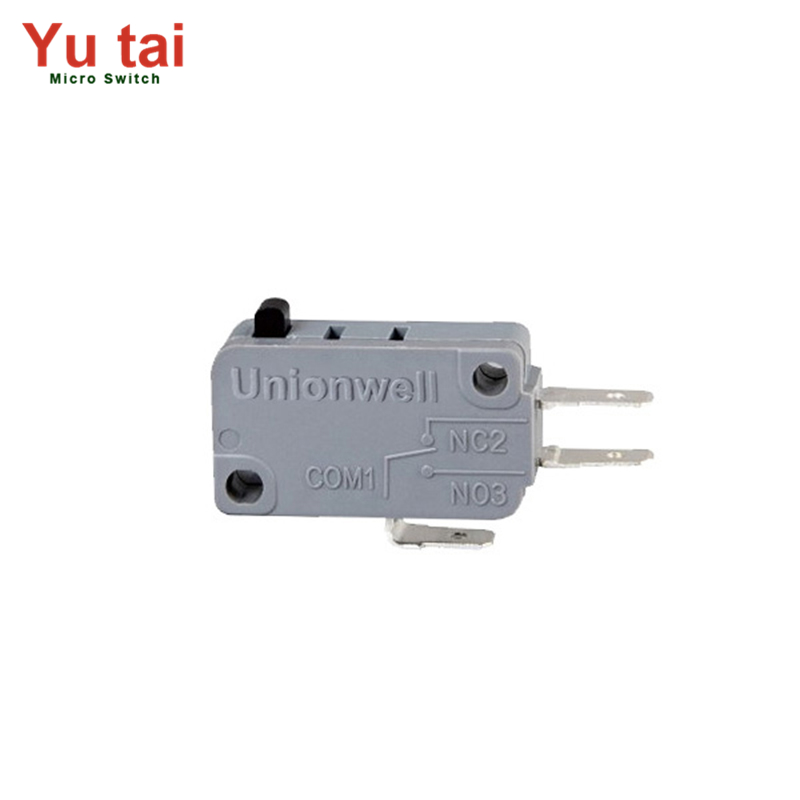
Engineers value the snap-action mechanism for its unparalleled precision. A tipping-point spring system drives this operation. It ensures rapid contact transfer regardless of the actuator's speed. As you press the actuator, a tension spring stores mechanical energy. Once it reaches a specific over-center threshold, the spring violently releases this energy. The contacts snap into their new position instantly.
This rapid transition provides immense business value. It prevents contact arcing in DC applications. Slow-moving actuators often cause continuous electrical arcs. The snap-action design eliminates this risk entirely. It ensures highly repeatable, precise actuation points. You can trust a standard Micro Switch to trigger at the exact same physical position across millions of cycles.
Heavy machinery requires an entirely different mechanical approach. The architecture here relies on brute durability. These devices typically comprise an actuator head, a heavy-duty switch body, and a robust terminal receptacle. Interestingly, the main body often houses a basic micro-mechanism internally. The external casing provides all the ruggedized protection.
This modular design delivers serious business value. The heavy actuator head absorbs mechanical shock. You can interface these components directly with heavy machinery without fear of destruction. They provide high Ingress Protection (IP) against industrial contaminants. An industrial Limit Switch survives cutting fluids, flying metal shavings, and extreme vibration daily.
Specification Dimension | Micro Variant | Standard Limit Variant |
|---|---|---|
Mounting Footprint | Highly compact (PCB or small panel) | Large footprint (DIN rail or heavy bracket) |
Actuation Force | Extremely low (often measured in grams) | High (measured in Newtons or pounds) |
Travel Distance | Short travel, minimal overtravel margin | Long travel, massive overtravel tolerance |
Electrical Load | Light loads (logic level up to 10A) | Heavy loads (industrial voltages, 15A+) |
Environmental Rating | Exposed or lightly sealed (IP40 to IP67) | Heavy-duty enclosures (NEMA 4X / IP67+) |
Spatial availability often dictates your sensor choice immediately. The micro variant is highly compact. Manufacturers design them for integration into Printed Circuit Boards (PCBs). You will find them inside consumer appliances or tight mechanical assemblies. They occupy minimal cubic volume.
Conversely, limit variants require larger mounting footprints. You cannot squeeze them into a handheld device. They bolt onto heavy machinery frames. They require robust mounting brackets. The physical size reflects the internal insulation needs and the sheer mass of the external actuator heads.
Operating forces separate these two categories clearly. The compact switches require extremely low operating force. We often measure this force in grams. A falling coin or a gentle finger press can trigger them. They possess very short travel distances.
The industrial limit devices require significantly higher force. A heavy steel door or a moving conveyor pallet actuates them. Furthermore, they tolerate large overtravel margins. If a moving mass travels slightly past the actuation point, the rugged lever absorbs the extra distance. A delicate switch would simply crush under the same conditions.
Electrical handling characteristics differ significantly. The limit variants generally handle higher industrial voltages and currents safely. They feature heavier contact materials. Silver-cadmium oxide or pure silver contacts manage heavy inrush currents. They utilize larger arc gaps to extinguish electrical fires.
The smaller variants handle lighter loads. Many feature gold-plated contacts. Gold excels at switching low-voltage logic signals for microcontrollers. While some compact models handle up to 15 amps, they cannot survive the harsh inductive loads common in factory environments.
We must evaluate ruggedness for field survival. The standard limit devices typically feature cast metal enclosures. Sometimes, they use heavy-duty polymer bodies. These components achieve NEMA or IP67+ ratings. They withstand oil, coolant, and physical impacts daily.
The smaller counterparts remain somewhat vulnerable. They are usually exposed or lightly housed. Dust and moisture can foul their internal contacts easily. Unless you specifically source sealed variants, you must keep them away from harsh factory floors. They perform best in clean, controlled environments.
You should deploy these compact components when precision and low operating forces matter most. They thrive in protected environments.
Consumer electronics, HVAC systems, and vending machines: They detect coin drops, monitor airflow vanes, and sense button presses reliably.
Safety interlocks in compact control panels or doors: Microwave doors use them to cut power instantly when opened. They ensure user safety without occupying excessive space.
Precision positioning in 3D printers or light automation robotics: They serve as excellent homing sensors. They tell the stepper motors exactly where the zero-position exists on an axis.
You must specify these rugged devices when brute force and harsh environments dominate the application. They survive where delicate sensors fail.
End-of-travel detection for heavy conveyor belts, gantry cranes, and CNC machinery: They stop massive moving objects before mechanical crashes occur.
Harsh environment monitoring: You can guarantee exposure to cutting fluids, dust, or outdoor weather. These components shrug off ice, mud, and continuous vibration.
Interfacing directly with industrial PLCs for heavy-duty safety overrides: They cut power to massive three-phase motors safely. They handle the inductive kickback without melting their internal contacts.
Define the Operating Environment: Does the application require resistance to washdowns, corrosive chemicals, or extreme temperatures? If you answer yes, lean toward a robust limit device. Alternatively, you might use a highly specified IP-rated miniature switch. Evaluate the ingress risks thoroughly.
Calculate Actuation Parameters: What is the mass and speed of the moving object? Determine the kinetic energy involved. Can it safely trigger a delicate sensor? Or will it crush the component without a heavy-duty actuator? Always account for physical overtravel.
Determine Electrical Requirements: Match the switch's contact rating to your electrical load. A pilot duty rating works perfectly for PLC inputs. However, direct control of a small motor requires a higher amperage rating. Check for inductive versus resistive load ratings.
Assess Maintenance Accessibility: Limit components often allow for modular replacement. You can swap just the actuator head if it wears out. You leave the wiring intact. Miniature switches usually require total replacement. You must unsolder or disconnect the entire unit. Consider the labor required for future repairs.
The most common failure mode for small switches is exceeding the specified overtravel. When an object pushes the plunger too far, the internal beryllium copper spring deforms. It loses its snap-action capability permanently. You must ensure mechanical stops are designed into your assembly. Hard stops prevent the moving mass from transferring its full force into the fragile sensor body.
Both mechanical switch types suffer from contact bounce. When physical contacts slam together, they literally bounce at a microscopic level. This generates rapid on-off voltage spikes for a few milliseconds. Highlight the necessity of hardware debouncing circuits. Alternatively, you must implement PLC software delays. A simple debounce timer prevents the controller from registering a single physical press as multiple false triggers.
Environmental fouling destroys unsealed components rapidly. Using a standard miniature switch in a condensing or dusty environment leads to internal fouling. Dust settles on the contacts, increasing resistance. Moisture causes rapid corrosion. Address the risk of underspecifying IP ratings to save initial costs. Spending a few extra dollars on a sealed variant prevents thousands of dollars in unplanned machinery downtime.
Micro switches offer incredible precision and compactness via their snap-action physics. They trigger reliably under minimal force. Conversely, limit switches offer ruggedized, high-force endurance. They execute critical tasks in harsh industrial environments. Selecting the right component prevents catastrophic machine failures and ensures long-term operational stability.
We advise engineers to audit their spatial constraints carefully. Evaluate the environmental hazards present in your facility. Calculate the exact actuation forces and overtravel distances before shortlisting components. A rigorous mathematical approach prevents premature hardware failures.
Prompt your engineering teams to consult technical datasheets thoroughly. Request product samples for rigorous physical testing. You should also contact the engineering support team for application-specific sizing advice. Expert guidance ensures you deploy the most reliable sensor for your specific mechanical demands.
A: Yes, technically, micro switches are often used to detect travel limits in light-duty applications. Engineers often call them "micro limit switches" in these scenarios. However, they lack the protective housing required for heavy industrial impact. You should only use them for limits in controlled, clean, and low-force mechanical environments.
A: No. While many standard limit switches utilize internal snap-action mechanisms, some use slow-make/slow-break contacts. The specific safety and electrical requirements dictate this choice. Slow-break contacts often feature positive-opening mechanisms. These force welded contacts apart during emergency safety overrides, ensuring absolute machine stoppage.
A: We must address lifespan strictly by duty cycle and electrical load. Micro switches can achieve 1 million to over 10 million cycles under extremely light logic loads. Heavy-duty limit switches are rated for immense mechanical survival. However, they may have lower electrical cycle lifespans depending on the heavy arcing loads they switch daily.